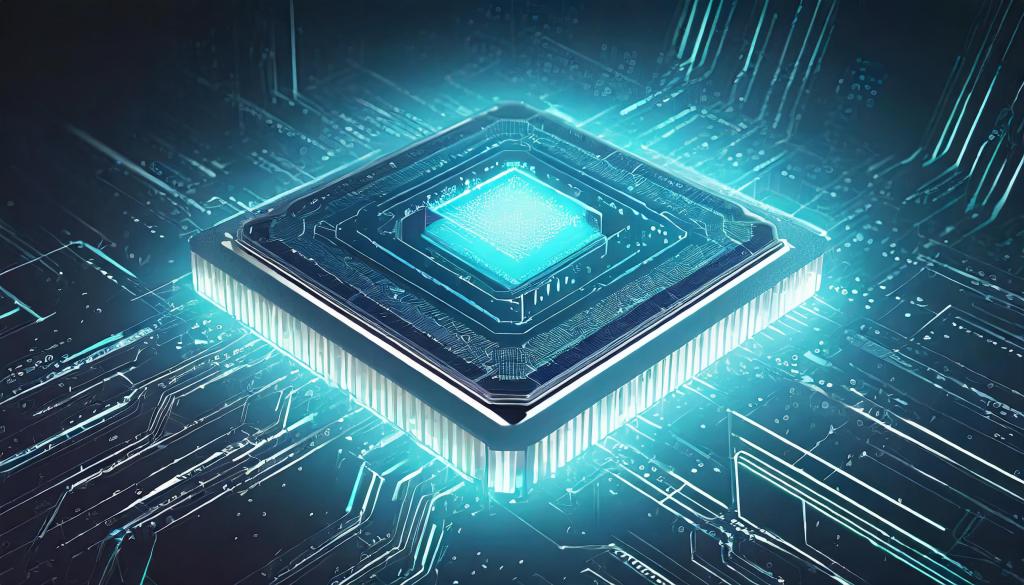
The world of AI-generated images is exploding with creativity, pushing the boundaries of what’s possible. But behind the scenes, a silent battle is raging: the fight for faster, more efficient chips to power this ever-evolving technology. While the results might seem magical, there’s a significant environmental cost associated with generating these dreamlike visuals. Enter the next generation of chip technology, poised to revolutionize the field by thinking faster, consuming less, and empowering more.
Beyond Gigawatts: Greenifying the AI Canvas
The environmental impact of AI image generation is no secret. Training and running complex models guzzles electricity, leaving a sizable carbon footprint. This is where energy efficiency becomes paramount.
- Neuromorphic chips, inspired by the human brain, offer a glimmer of hope. Companies like Intel and IBM are developing chips like Loihi and TrueNorth, mimicking neural networks with potential for vastly reduced power consumption.
- Optical computing, utilizing light instead of electricity, emerges as a game-changer. Researchers at Penn State have created an optical chip processing images almost instantaneously, paving the way for a potentially energy-neutral future.
From Data Centers to Your Pocket: Democratizing Image Creation
Accessibility is another crucial aspect. Currently, powerful image generation tools are often confined to research labs and large companies. Bridging this gap is essential to unleashing the full potential of this technology.
- Edge computing chips, pioneered by companies like Qualcomm and Samsung, bring processing power closer to the source. Imagine drones generating real-time maps on the fly or robots creating custom objects using on-device AI.
- Specialized memory solutions like high-bandwidth memory (HBM) and compute-in-memory (CIM) architectures aim to reduce data access bottlenecks, paving the way for faster, more efficient image generation on diverse devices.
A Convergence of Powerhouse Technologies
While each approach holds promise, the future likely lies in a symphony of these technologies. Imagine chips seamlessly combining the speed of AI accelerators, the efficiency of neuromorphic designs, the lightning-fast processing of optical computing, and the accessibility of edge computing solutions.
References:
- Optical deep learning: https://blog.seas.upenn.edu/penn-engineers-create-chip-that-can-process-and-classify-nearly-two-billion-images-per-second/
- Loihi neuromorphic chip: https://www.intel.com/content/www/us/en/research/neuromorphic-computing.html
- TrueNorth neuromorphic chip: https://research.ibm.com/publications/truenorth-design-and-tool-flow-of-a-65-mw-1-million-neuron-programmable-neurosynaptic-chip
- Qualcomm edge computing chips: https://www.qualcomm.com/research/artificial-intelligence
- Samsung edge computing chips: https://semiconductor.samsung.com/support/tools-resources/dictionary/edge-computing/
- High-bandwidth memory (HBM): https://www.electronicdesign.com/technologies/embedded/article/21271278/electronic-design-microns-next-gen-hbm-pushes-memory-bandwidth-boundaries
- Compute-in-memory (CIM): https://www.itri.org.tw/english/ListStyle.aspx?DisplayStyle=01_content&SiteID=1&MmmID=1071732317047353240&MGID=1126511564376461471
The Impact: Beyond Beautiful Pictures
This technological leap won’t just benefit artists and designers. Imagine personalized medical imaging on remote devices, robots adapting to their environment in real-time, or educational tools tailored to individual learning styles. The possibilities are endless.
By focusing on efficiency, accessibility, and responsible development, the next generation of image generation chips promises not just stunning visuals, but a democratized and sustainable future for AI-powered creativity.
Join the Conversation
What excites you most about these chip advancements? What ethical considerations do we need to address? Share your thoughts in the comments below!
This blog post is just a starting point. As research and development in these areas accelerate, stay tuned for even more exciting updates about the future of AI image generation chips!



 Eye4AI Art
Leave a comment