
The realm of AI art generation has captivated audiences with its ability to translate imagination into captivating visuals. But what drives this artistic innovation? The unsung hero behind this artistic revolution is the Graphics Processing Unit (GPU).
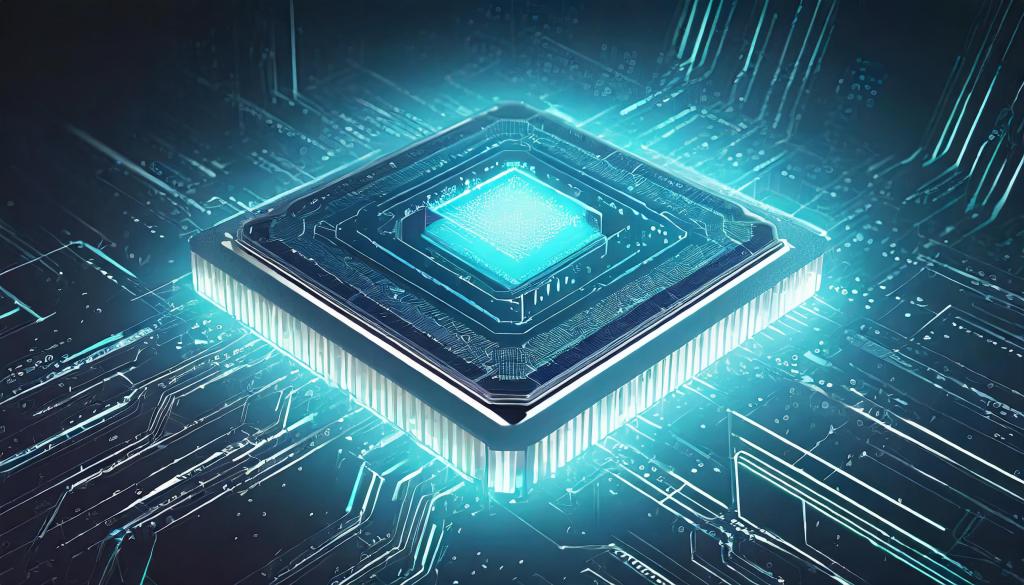
GPUs are specialized processors designed for parallel processing, enabling them to tackle numerous calculations simultaneously. Unlike Central Processing Units (CPUs) that handle tasks sequentially, GPUs excel at tasks involving massive datasets, making them ideal for AI applications like art generation.
Empowering the AI Artist
- Training the Algorithmic Muse: Training an AI art model involves processing vast amounts of image and text data. GPUs significantly accelerate this process by handling the complex calculations needed for the model to learn and refine its artistic capabilities.
- From Prompt to Painting: Once trained, the AI model can generate new artwork based on user prompts or specific styles. GPUs provide the essential processing power to translate these prompts into visual representations, ultimately creating the final artwork.
In essence, GPUs act as the engine that drives the complex computations behind AI art generation. While some basic AI art tools might function on CPUs, utilizing a GPU significantly enhances the speed, quality, and complexity of the generated art.
Beyond the Surface: Unveiling the GPU’s Architecture
While CPUs and GPUs share similarities, they have distinct characteristics optimized for their specific functions:
- Cores and Threads: Unlike CPUs with a few powerful cores, GPUs boast numerous cores (often in the hundreds or thousands) designed to handle simpler tasks simultaneously. Each core can further divide tasks into even smaller units called threads, enabling massive parallel processing.
- Memory Architecture: GPUs have dedicated VRAM (Video RAM) specifically designed for high-speed data access, crucial for handling the large datasets involved in graphics processing and AI applications.
- Specialized for Speed: CPUs are versatile, but GPU architecture is specifically designed for tasks like handling matrices and vectors, common in graphics and AI computations. This specialization allows them to excel at these tasks compared to CPUs.
From Design to Market: The Birth of a GPU
Manufacturing a GPU is a complex process akin to creating other integrated circuits:
- The Design Blueprint: The process begins with meticulously designing the GPU architecture, defining the number and type of cores, memory structure, and functionalities.
- Bringing the Design to Life: The design is then translated into a physical layout on a silicon wafer using a process called photolithography. This involves layering and etching various materials to create the intricate circuits that make up the GPU.
- Rigorous Testing and Packaging: Once fabricated, individual GPU chips undergo rigorous testing to ensure functionality and performance. They are then packaged into the final product, which can be a discrete graphics card or integrated into another device.
What Alternatives are There?
While GPUs reign supreme in AI training due to their parallel processing prowess, there are alternative approaches to consider, each with its own advantages and limitations:
- TPUs (Tensor Processing Units): These custom-designed chips, pioneered by companies like Google, are specifically optimized for AI workloads. TPUs offer superior performance and efficiency compared to both CPUs and GPUs for specific deep learning tasks. However, their inflexibility and high cost make them less suitable for diverse applications or research requiring frequent model adjustments.
- FPGAs (Field-Programmable Gate Arrays): These versatile chips can be programmed to perform various tasks, including AI computations. FPGAs offer a balance between flexibility and performance, allowing customization for specific algorithms. However, programming FPGAs requires specialized expertise and can be time-consuming compared to using pre-built hardware like GPUs.
- Cloud-Based Solutions: Cloud platforms like Google Cloud TPUs, Amazon Elastic Compute Cloud (EC2), and Microsoft Azure offer access to powerful hardware resources, including GPUs and TPUs, on a pay-as-you-go basis. This eliminates the need for upfront investment in expensive hardware and provides flexibility in scaling resources based on training requirements.
- Algorithmic Optimization: Optimizing the AI algorithms themselves can significantly reduce the computational demands of training. This involves techniques like model pruning, quantization, and knowledge distillation, which can make training more efficient on CPUs or even mobile devices.
Understanding the power of GPUs and their role in AI art generation provides a deeper appreciation for the intricate workings of this captivating technology. As AI art continues to evolve, GPUs will undoubtedly play a pivotal role in shaping the future of creative expression, but we can expect further advancements in alternative hardware and algorithmic techniques to provide even more efficient and accessible solutions for AI training.



 Eye4AI Art
Leave a comment